Skip to content
Table of Contents
You notice it in certain lighting. A scattering of brown spots across the cheeks, freckles that used to be cute and now just look blotchy, a patch near the temple that wasn’t there a few years ago. Makeup covers it, but the tone underneath keeps drifting further from even.
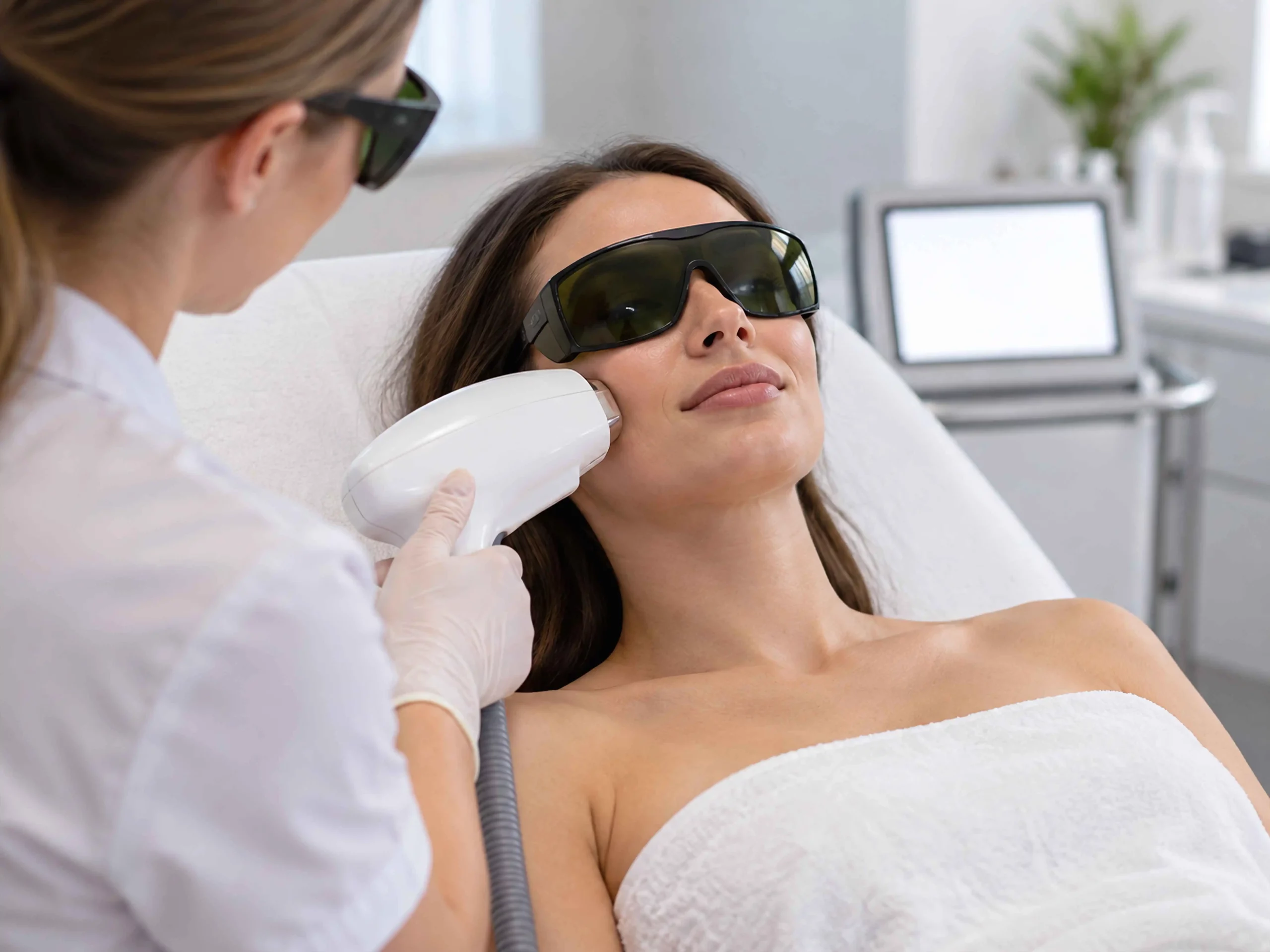
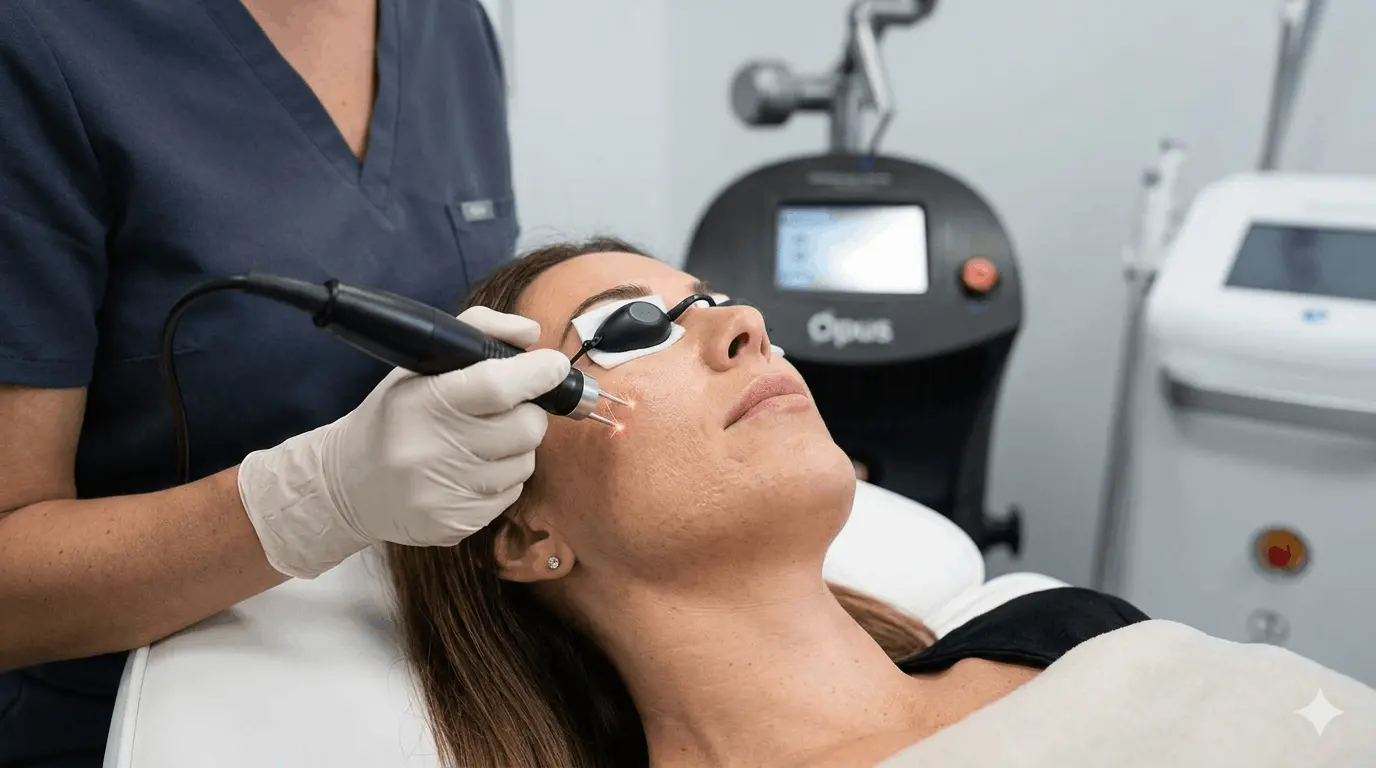
IPL photofacial for sun damage works by sending pulses of broadband light into the skin, where excess pigment absorbs the energy and causes unevenness. Here is what that looks like in practice, what the results realistically are, and who the treatment suits.
Can a photofacial fade the brown spots from years outdoors?
A photofacial reduces those spots by sending pulses of light into the skin, where the energy is absorbed by the clustered pigment that creates uneven tone. That pigment breaks up, rises to the surface, and flakes away over the following week. Most patients need a series of three to five sessions about four weeks apart, and results typically continue developing for roughly three months after the final visit.
Why Sun Damage Shows Up as Uneven Skin Tone
Sun damage appears as spots rather than an even tan because your skin’s pigment response isn’t uniform. Ultraviolet light signals melanocytes, the pigment-producing cells, to produce more melanin for protection, and over time those cells become hyperactive in some areas and not others. That is what you see as brown spots, darkened freckles, and patchy tone, and most of it accumulates quietly across decades, which is why people often first notice it in their thirties and forties.
Living along the Wasatch Front adds to the total. Lehi sits above 4,500 feet, and UV intensity climbs with elevation. Add the light bouncing off snow in January and the hours on Utah Lake in July, and your skin here gets more exposure than most people realize. That is a large part of why IPL for sun damage in Lehi, UT comes up so often in consultations.
How IPL Photofacial Targets Sun Damage
IPL stands for intense pulsed light, and it is not technically a laser. A laser emits one focused wavelength, while IPL releases a broad spectrum of light at once. That range is what makes it a useful treatment for sun-damaged skin and IPL for hyperpigmentation, since it reaches different pigment concentrations at different depths.
The light passes through the outer layer of skin and is absorbed by concentrated pigment below it. That energy converts to heat, which disrupts the overactive cells holding the discoloration in place. The pigment then breaks up and is drawn toward the surface, where your body clears it.
The same pulses also target hemoglobin, which is why Cosmedics Med Spa uses IPL for facial redness, rosacea, and broken capillaries. For sun damage, pigment is the target, and patients most often want treatment on the face, neck, chest, and hands.
What Happens to Sun Spots After Treatment
Your spots will look darker before they look better, and this surprises almost everyone. Within a day or two, the disrupted pigment rises toward the surface and becomes more visible than it was before you walked in. Over the following week, it takes on a dry, coffee-ground texture and flakes away on its own. Let it. Picking or scrubbing pulls pigment before the skin underneath is ready and raises the risk of irritation.
Knowing that sequence ahead of time makes a photofacial for brown spots much easier to sit through. A full face session at Cosmedics runs about 45 minutes, and patients typically describe a quick snap against the skin rather than pain. Mild redness may last a few days, but there is no significant downtime, and you can put makeup back on right away.
What Kind of Improvement to Expect, and How Long It Takes
Improvement builds across a series, not in a single visit. Cosmedics typically recommends three to five treatments spaced about four weeks apart, because each session clears a portion of the pigment rather than all of it. Results keep developing afterward, and most patients see the fullest improvement around three months after their final session.
It’s worth being honest about what improvement means here. IPL for sun spots softens and reduces discoloration so your tone looks more even. It doesn’t erase a lifetime of sun exposure, and how much you see depends on how deep your pigment sits and how long it’s been accumulating, so results vary.
Who Is and Is Not a Good Candidate
Good candidates for IPL for uneven skin tone tend to have lighter skin with defined brown spots, freckles, or sun-related discoloration. Because the light is drawn to pigment, IPL is not suitable for:
- Higher Fitzpatrick skin types. The scale runs from type I, very fair, to type VI, very dark, and deeper skin tones carry more baseline pigment, which raises the risk of discoloration rather than clearing.
- Actively tanned skin, since a recent tan changes how the light is absorbed.
- Melasma, which can darken in response to light and heat rather than fade.
Timing matters too. Anyone who has taken Accutane or a strong antibiotic should wait six months after their last dose. None of this is meant to be self-assessed, which is what a consultation is for.
Protecting Your Results After IPL
Daily sunscreen determines how long your results hold, more than any other factor. The pigment cells IPL addresses still respond to UV, so unprotected exposure brings old spots back and creates new ones. Broad-spectrum SPF every morning, reapplied through the day, is the maintenance plan.
Stay out of direct sun for at least the week after each session while your skin clears. Many patients return for a refresher series roughly once a year to keep the tone they worked for from slipping back.
Evening Out Sun-Damaged Skin Starts With a Consultation
IPL photofacial benefits for sun damage come down to one thing. It breaks up clustered pigment that creates uneven tone and clears it over a short series of sessions. It is not instant, and it is not right for every skin type, but for the right candidate it addresses the cause rather than covering it. Whether IPL skin rejuvenation suits your skin depends on your tone, pigment type, and sun history, which a licensed aesthetician can assess in person.
Ready to address the visible effects of sun damage and achieve a more even-looking complexion? Schedule an IPL Photofacial consultation with Cosmedics Med Spa in Lehi, UT, to explore a personalized treatment plan.